
Colors shape how we navigate the world. They signal safety, beauty, and meaning in everyday life from traffic lights to the foods we eat. But for millions of people, colors don’t appear the same way. This condition, known as color blindness or color vision deficiency (CVD), affects how individuals perceive certain shades.
If you’ve ever wondered what color blindness really means, how it works, and how it affects daily life, this guide provides a beginner-friendly breakdown of everything you need to know.
What Is Color Blindness?
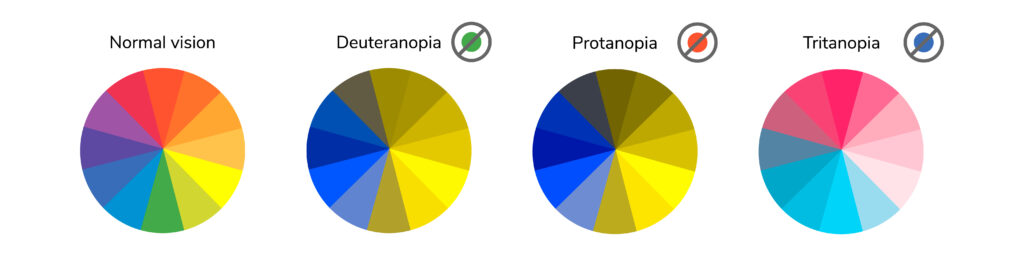
Color blindness is a vision condition where a person struggles to distinguish between certain colors. Despite the name, most people who are “color blind” can still see colors, but not in the usual way. For example, reds may look like browns, or greens may look more muted.
True complete color blindness where the world is seen only in shades of gray is extremely rare. Most cases involve difficulty telling specific colors apart, especially red and green.
How Normal Color Vision Works
To understand color blindness, let’s look at how color vision normally functions.
Inside the eye’s retina are two main types of light-sensitive cells:
- Rods – detect light and dark, useful in low-light conditions.
- Cones – detect colors in bright light.
Humans typically have three types of cones:
- Red-sensitive cones (L-cones)
- Green-sensitive cones (M-cones)
- Blue-sensitive cones (S-cones)
When these cones detect light, they send signals to the brain, which combines them to form the colors we see. Color blindness happens when one or more cone types don’t work properly or are missing.
Types of Color Blindness
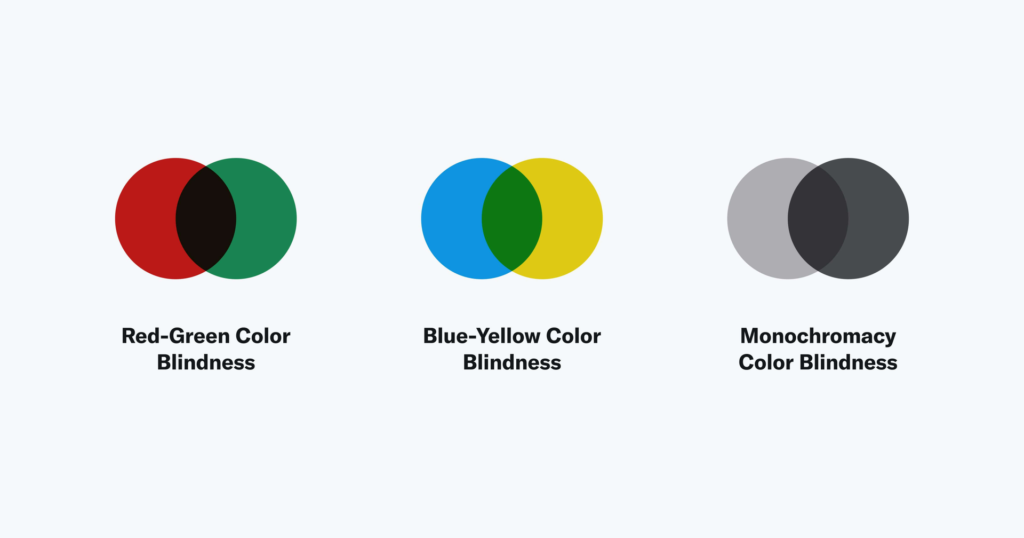
Color blindness varies depending on which cones are affected. The main types include:
1. Red-Green Color Blindness (Most Common)
- Protanomaly: reduced sensitivity to red light.
- Protanopia: inability to perceive red light.
- Deuteranomaly: reduced sensitivity to green light (the most common form).
- Deuteranopia: inability to perceive green light.
2. Blue-Yellow Color Blindness (Less Common)
- Tritanomaly: reduced sensitivity to blue light.
- Tritanopia: inability to perceive blue light.
3. Complete Color Blindness (Very Rare)
- Monochromacy: no perception of color, only shades of gray.
Causes of Color Blindness
Color blindness can be either inherited or acquired.
- Genetic Causes:
- Passed through the X chromosome.
- More common in men (1 in 12) than women (1 in 200).
- Acquired Causes:
- Eye diseases (glaucoma, macular degeneration, diabetic retinopathy).
- Brain or optic nerve damage.
- Certain medications or chemical exposure.
Symptoms of Color Blindness
The condition can range from mild to severe. Common signs include:
- Confusing reds and greens, or blues and yellows.
- Struggling to notice differences in brightness.
- Difficulty reading color-coded charts or maps.
- Choosing mismatched clothing.
- Children confusing crayons or paints during play.
Often, individuals don’t realize they have color blindness until tested.
Color blindness – Symptoms and causes
How Is Color Blindness Diagnosed?
The most common test is the Ishihara test, which uses colored dot patterns with hidden numbers. People with color blindness may be unable to see the numbers correctly.
Other tests include:
- Anomaloscope: measures perception of red and green light.
- Cambridge Color Test: computer-based assessment.
- HRR plates: detect red-green and blue-yellow deficiencies.
Daily Challenges of Color Blindness
Color blindness can create unique challenges, such as:
- Traffic lights: difficulty distinguishing red from green.
- Food preparation: trouble judging ripeness or doneness.
- Education: problems with color-coded charts or diagrams.
- Careers: restrictions in jobs like aviation, electrical work, and design.
- Fashion: unintentional mismatched outfits.
Coping Strategies and Tools
While there’s no permanent cure for inherited color blindness, several solutions can help:
- Color-correcting glasses or contacts – enhance perception of certain colors.
- Apps & technology – color identification tools and filters for screens.
- Accessible design – labels, textures, and high-contrast visuals help reduce reliance on color.
- Everyday adjustments – relying on context (like traffic light position) instead of color alone.
Common Myths About Color Blindness
- Myth 1: All color-blind people see only black and white.
Fact: Most can see colors, just not as vividly or accurately. - Myth 2: Only men are affected.
Fact: Women can also be color blind, though it’s rarer. - Myth 3: Color blindness worsens with age.
Fact: Inherited forms remain stable, but age-related eye issues can cause new problems.
Can Color Blindness Be Treated?
There’s no cure for inherited color blindness yet, but research in gene therapy is promising. For acquired forms, treating the underlying cause such as managing diabetes or cataracts may help improve color vision.
Conclusion
Color blindness is a common condition that changes how people see and interpret colors. While it may bring challenges in daily life, growing awareness, inclusive design, and adaptive tools are making the world more accessible than ever before.
By understanding what color blindness is and how it works, we can better support those who experience it and design a world where color isn’t the only way we communicate information.
Read More: 5 Benefits Of Shea Butter For Your Skin